The Context
Footprint Tools had genuine strengths that its website wasn't reflecting clearly enough:
- ✓ Hand tools manufactured at Admiral Works in Sheffield
- ✓ Toolmaking heritage reaching back to the 1760s
- ✓ The original Footprint wrench, first developed in Sheffield in 1875
- ✓ Builders', woodworking, decorating, and pipe-wrench ranges
- ✓ Specific manufacturing stories, including a 14-stage brick-bolster process
- ✓ Established distribution through professional stockists
The existing website contained these stories, but did not organise them around the way a tradesperson or buyer evaluates a professional tool brand. It failed to communicate:
The challenge was not to invent a new identity. It was to make the products, Sheffield provenance, and practical manufacturing knowledge immediately clear to a professional visitor deciding whether Footprint belongs in their kit or on their shelves.
The Core Problem
A Generic First Impression
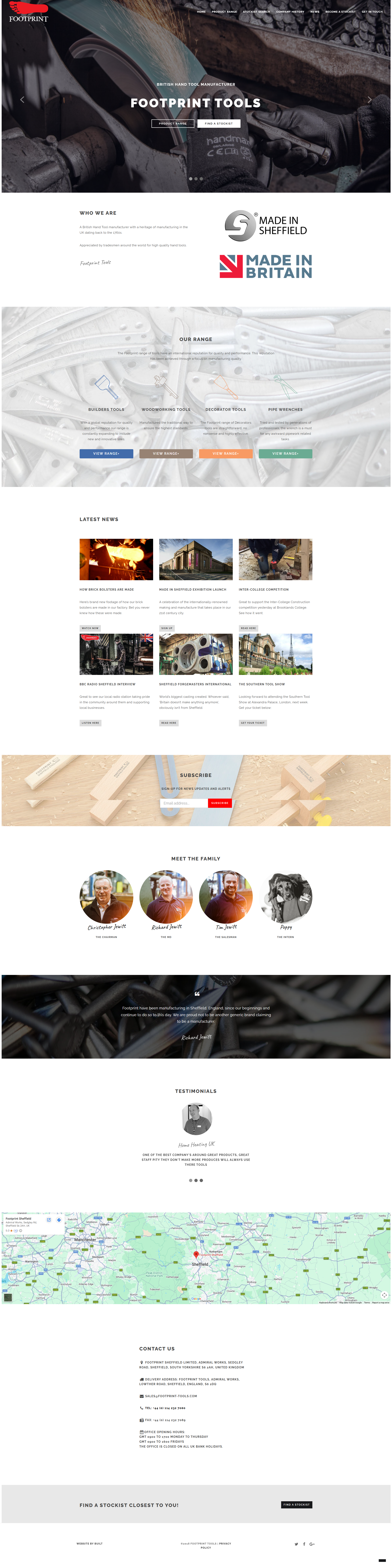
The homepage title was “Home - Footprint Tools”, had no meta description, and presented three identical H1 headings. The first screen named the brand but did not clearly explain the products, professional audience, or Sheffield advantage.
Products Were Not the Main Journey
Brand, news, and company content competed with the practical questions visitors bring: what tools do you make, why should I trust them, and where can I buy them? The range needed to become the organising structure.
Index Quality Was Diluted
The SEO audit found 171 sitemap URLs, including 71 product-tag archives alongside low-value theme, author, and testimonial pages. Useful product content was competing with a large volume of weak indexable pages.
Product Templates Lacked Focus
All 44 audited product pages used “Shop” as the main H1 rather than the product name. That weakened page clarity for both visitors and search engines at the point where specifications and buying intent matter most.
Manufacturing Proof Was Buried
The Sheffield manufacturing process and specific product stories already existed, but they were not doing enough work on the homepage. Heritage appeared as a broad claim rather than evidence connected to real tools.
Technical Debt Weakened the Foundation
The crawl found 141 pages without meta descriptions and 565 missing or blank image alt attributes. The homepage also loaded 64 scripts and 26 stylesheets, although Core Web Vitals could not be verified during the audit.
Strategic Repositioning
The repositioning goal was clear:
Shift from a "brand-first company homepage" to "Professional hand tools made in Sheffield."
This required leading with the product and audience, organising the range for instant scannability, turning Sheffield manufacturing into specific proof, and giving tradespeople and stockists clear next steps.
Ideal Customer Profile
- Tradespeople choosing dependable tools for regular professional use
- Builders, plumbers, woodworkers, and decorators comparing product ranges
- Existing Footprint users looking for a specific tool or replacement
- Buyers who value British manufacture and proven product design
- Independent and trade stockists evaluating the Footprint range
Core Customer Questions
- ? Which tools do you make for my trade and application?
- ? Are these tools genuinely manufactured in Sheffield?
- ? What makes Footprint different from other professional tool brands?
- ? Where can I see product details and find a nearby stockist?
- ? How can my business become a Footprint stockist?
The new structure answers every one of these questions before the customer has to ask.
Structural Transformation
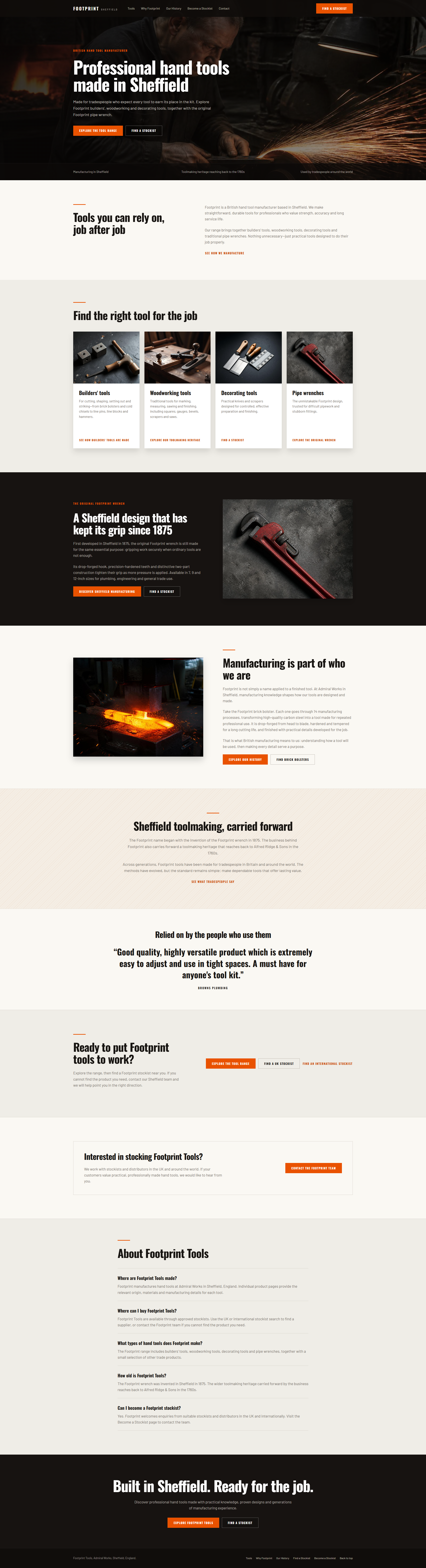
1.Hero Section — Product, Audience, Origin
Replaced the repeated brand-name message with one descriptive headline: “Professional hand tools made in Sheffield.” The supporting copy names the core ranges and professional audience, while two calls to action lead to the tool range and stockist search.
2.Proof Bar — Immediate Confidence Signals
A compact strip below the hero surfaces three concise reasons to keep exploring: Manufacturing in Sheffield, toolmaking heritage reaching back to the 1760s, and used by tradespeople around the world.
3.Tool Range — Four Categories at a Glance
Builders' tools, woodworking tools, decorating tools, and pipe wrenches are presented as image-led cards with concise descriptions and direct routes into the range. Visitors can identify the relevant category without reading through company copy first.
4.Flagship Product — The Original Footprint Wrench
The wrench first developed in Sheffield in 1875 becomes a focused product story. Its drop-forged hook, precision-hardened teeth, two-part construction, and available sizes turn a heritage reference into practical product evidence.
5.Manufacturing Process — Proving the Sheffield Claim
The brick bolster's 14-stage production process gives “Made in Sheffield” substance. It shows the forging, hardening, grinding, finishing, and inspection behind a familiar product rather than relying on broad claims about quality.
6.Heritage — Context After Product Proof
The longer company story follows the range and manufacturing evidence. This preserves Footprint's distinctive history while ensuring heritage supports the commercial proposition instead of delaying it.
7.Conversion Architecture — Routes for Users and Stockists
Product exploration and stockist search remain the primary user actions. A separate become-a-stockist route, practical FAQs, and contact information support trade buyers without distracting from the main customer journey.
Visual Transformation
The Old Design
The New Design
Key Strategic Details
Proof Over Adjectives
Instead of leaning on vague quality or heritage language, the page uses named products, the original wrench story, and the 14-stage brick-bolster process to make Sheffield manufacturing tangible.
Two Audiences, One Clear Homepage
Tradespeople need to discover products and find somewhere to buy. Stockists need to assess the range and understand how to work with Footprint. The hierarchy serves both without making them compete above the fold.
SEO Findings Shaped the Structure
The audit was not treated as a separate checklist. Its findings informed the page hierarchy: one descriptive H1, meaningful category routes, focused copy, stronger internal destinations, and content built around real buying questions.
What This Project Demonstrates
Footprint Tools is a strong example of a manufacturer whose website contained valuable products, history, and expertise without arranging them into a clear commercial story. The raw material was already there; the hierarchy was not.
The result is not just a better-looking homepage. It is a clearer product experience that connects professional users with the tools, proof, and buying routes they need.
Why This Matters for Established Manufacturers
A long history is valuable only when customers can connect it to the product in front of them. Manufacturing businesses often have deep proof hidden across product pages, news posts, and internal knowledge. A stronger homepage turns that material into a reason to choose the brand.
Is Your Website Hiding What Makes You Different?
If your business has strong products, specialist knowledge, and a credible history but the website still feels generic, the gap is usually positioning and structure. Let's identify what customers need to understand before they choose you.
Book a Consultation